First Aid · 5 minute read
Surviving Jetlag: Adults, Kids and Babies
Eight flights, three countries, and a lot of worrying beforehand I'll be honest with you. When my husband and I booked eight flights in one month across Canada, Colombia and Brazil, I wasn't thinking about jetlag first. I was thinking about my legs. I'd had a DVT before, years ago, after a long haul flight from Sri Lanka. So this time, before I'd even packed a bag, I was at my GP's asking what I needed to do differently. She was firm with me: an anticoagulant injection before each flight, and compression socks, non-negotiable. That conversation probably mattered more than anything else I did that month. It was just the two of us on this trip, no children in tow, but it got me thinking back to all the long haul flights I did years ago with my own kids, right from when they were tiny babies. And now I have a grandchild, it's exactly the advice I find myself giving my daughter. So I wanted to write it all down properly, for her, and for any of you in the same boat. If you've had a clot before, please talk to your GP first This isn't something to wing. If you have a personal or family history of DVT, are pregnant, postnatal, or have any other risk factors, get medical advice before you fly, ideally with time to plan, not the night before.
On the plane itself: Wear proper compression socks (fitted, not just "flight socks" off the shelf) Get up and move every hour or two if you can. Keep drinking water. Cabin air is dehydrating, and dehydration doesn't help! Do simple ankle circles and calf raises in your seat. Call 999 or go to A&E immediately if you have gleg swelling, pain, redness or warmth in one leg, especially after flying, and definitely if you develop sudden breathlessness, chest pain, or you're coughing up blood. These can be signs of a DVT or pulmonary embolism and need urgent attention, not a wait and see approach.
Jetlag for you, the grown-up. Once the flying itself is sorted, jetlag is mostly about patience with your own body clock. Get outside in daylight as soon as you land. Light is the biggest reset button we have. Try to eat and sleep on the new time zone from day one, even if you're not hungry or tired yet. Short naps only (20 to 30 minutes). A long nap at the wrong time just resets nothing. Give yourself roughly a day per time zone crossed before you expect to feel normal.
Jetlag with children I flew long haul with my own two when they were small, and I remember the first couple of days always being the hardest, for me as much as them. Get them outside in daylight too. It works the same way for their little body clocks. Keep bedtime routines familiar even if the time on the clock is odd: bath, story, same order. Expect early wake ups for a few days and don't panic about it. It will be fine. Offer meals at the new local times, even small ones, to help reset their rhythm.
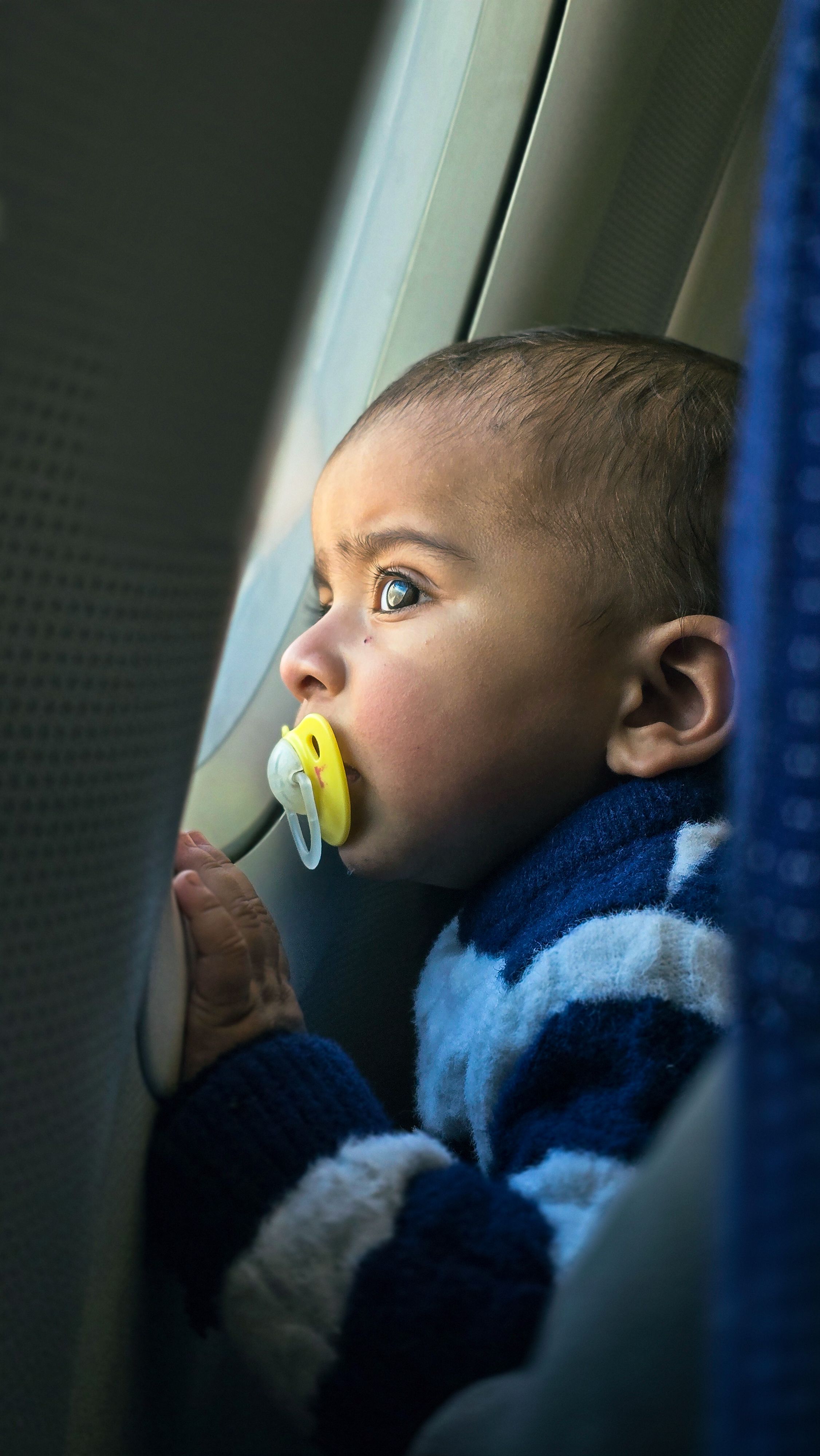
Jetlag with babies and toddlers. This is the bit I'm now passing on to my daughter, having done it myself as a young mum and having supported so many families with it since. Babies and toddlers don't really understand "jetlag" as such. They just follow feeding, sleeping and daylight cues, so lean into that. Feed on demand and follow their hunger cues rather than a strict schedule for the first few days. Get them into natural daylight during the day, and keep evenings dim and calm. One overtired, overstimulated day is normal. It usually settles by day three or four. If a baby is unusually unsettled, feeding poorly, or you're worried about dehydration (fewer wet nappies, dry mouth), call 111 or your GP for advice.
What I actually learned, again! Jetlag sorts itself out, given a few days and some daylight. Clots don't sort themselves out. They need proper prevention and quick action if something feels wrong. Whether you're flying as a couple like we were this time, with a baby on your hip like I once did, or you're my daughter reading this before her next trip, the same rules apply: look after your legs, and be patient with everyone's body clock, including your own. Travel safe, rest when you can, and be kind to yourselves as you find your feet again. Eva x
Eva Levinson is a part-time Postnatal Midwifery Assistant & Infant Feeding Specialist for the NHS, a Doula UK trained postnatal doula, and an Ofsted/HSE compliant first aid instructor. She runs And Chillax in Anerley, South London.