Doula · 5 minute read
Why Grandma's Old Toy Box Beats Anything New
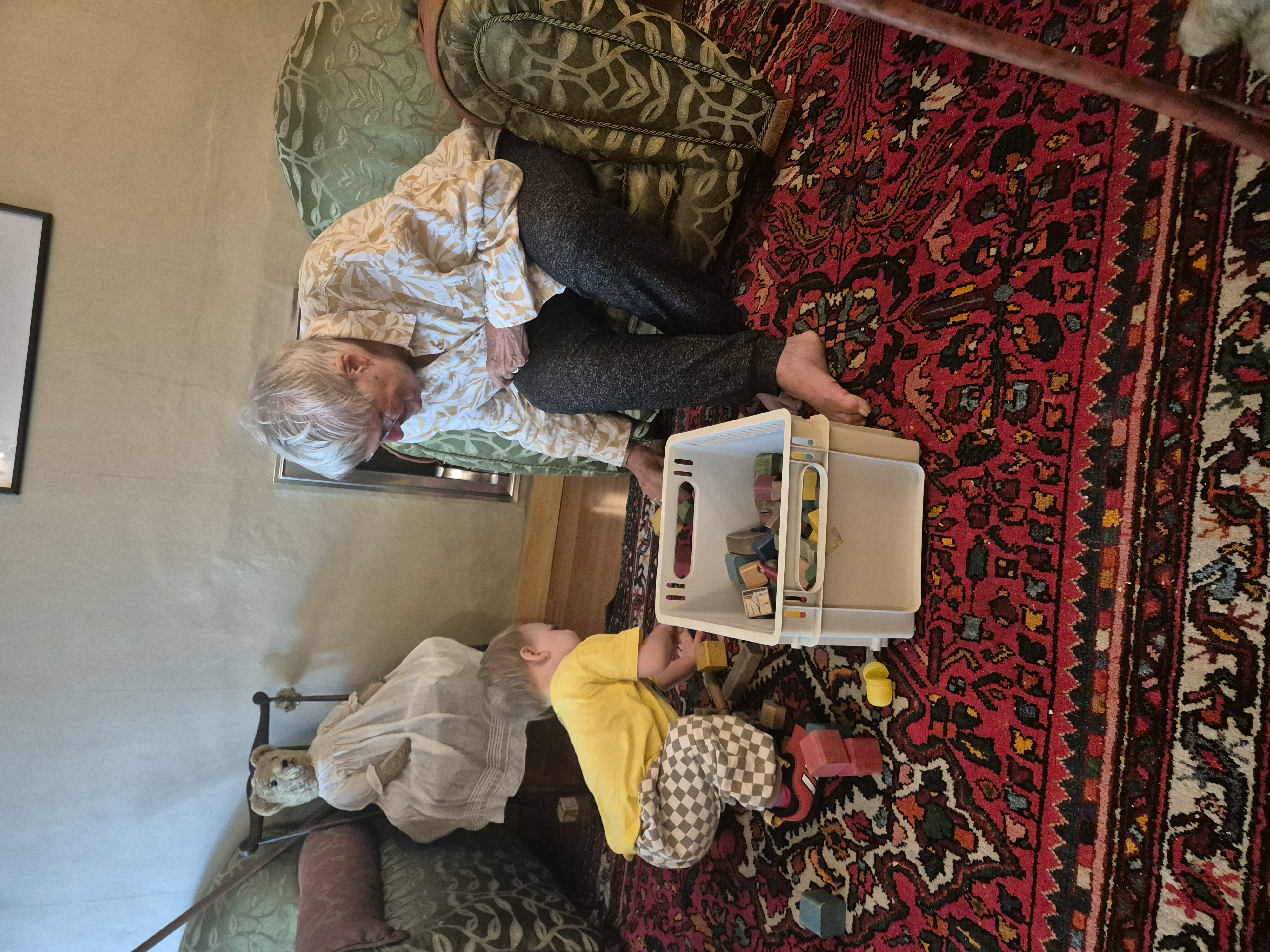
This morning my grandson's great grandma dug out an old box of wooden blocks. Some were chipped. One had a faded sticker peeling off it. Honestly, they looked like they'd been rescued from a skip. He's 21 months old, and he loved every single one.
He didn't care that they were old. He didn't care that they didn't light up, make noise, or come with an app. What he cared about was her, sitting on the floor with him, handing him a block, waiting for him to hand one back, clapping when he stacked two together. That's it. That's the whole magic trick.
It's never really about the toy!
We spend a lot of energy as parents (and grandparents) worrying about the "right" toys: open-ended, Montessori-approved, screen-free, wooden, ethically sourced. All lovely things to think about. But toddlers don't do a materials audit before they play.
What they're actually looking for is: Someone's full attention.
A back-and-forth rhythm (give, take, repeat) A face that lights up when they do something.
The same game, over and over, because repetition is how they learn.
An old, slightly battered toy box ticks every one of those boxes just as well as anything from a shop. Sometimes better, because there's a story attached, like "this was your mummy's when she was little."
Why grandparents and great grandparents are so good at this.
Grandparents and great grandparents often have something parents are short on in the thick of early parenting: time, and no agenda. They're not trying to get through nap time, work emails, and dinner all at once. They can just sit on the floor for twenty minutes and watch a toddler stack blocks and knock them down, then stack them again.
That unhurried presence is genuinely valuable for a small child's development, and honestly, for the grandparent too. Watching a great grandma's face when her great grandson claps for himself is a joy that doesn't need explaining.
A quick word on safety with old toys Old toys can be wonderful, but it's worth a quick once-over before handing them to a toddler under 3:
Check for small, loose, or detachable parts (button eyes, wheels, small magnets).
Check for chipped paint, especially on anything from before the 1970s to 80s, which may contain lead.
Check for splinters on wooden toys and sand them down if needed.
Avoid anything with long cords, ribbons, or small batteries that could come loose.
When to seek urgent help: if a child swallows a small part, a battery, or a magnet, or is choking and struggling to breathe or cough, call 999 immediately. If you're not sure whether something's been swallowed but you're worried, NHS 111 can talk it through with you.
The takeaway.
You don't need to buy anything for this one. Next time grandparents or great grandparents want to play with your little one, let them raid the loft, the back of a cupboard, or that box of "your old things" that's been sitting there for years. A few minutes of genuine, unhurried attention with a battered old toy will do more for your child than most things wrapped in plastic packaging.
And if you're the grandparent reading this, go and get the blocks out. He'll love it. And so will you.
Take care of yourselves,
Eva x
Eva Levinson is a part-time Postnatal Midwifery Assistant & Infant Feeding Specialist for the NHS, a Doula UK trained postnatal doula, and an Ofsted/HSE compliant first aid instructor. She runs And Chillax in Anerley, South London.