Doula · 5 minute read
Your Baby's World Is a Swirl of Colour and Sound
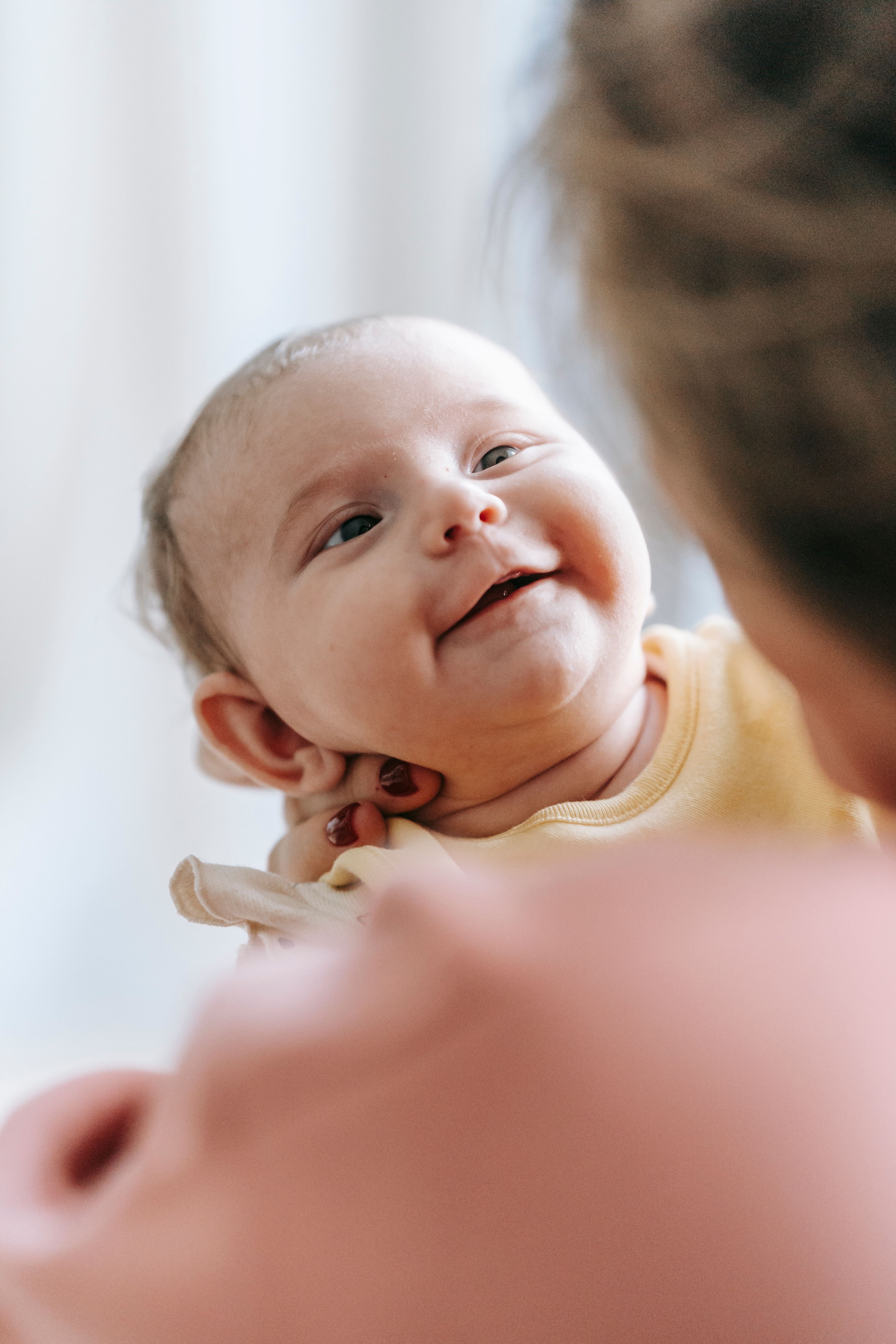
Your Baby Might Be Hearing Colours Right Now Imagine your mum's voice arriving wrapped in a warm golden glow. Or a sudden noise sending a quiet flash of colour across your vision. Or your dad's deep voice feeling earthy and rich, almost like something you could touch. That's not a dream. That's very likely what your newborn baby is experiencing every single day. It's called synesthesia and for most babies, it's not a quirk or a condition. It's just how brand new brains work.
What Is It, In Plain English? Synesthesia is when the senses get a little mixed up with each other. A sound might bring a colour with it. A voice might carry a texture. A smell might have a shape. In adults, true synesthesia is rare and tends to run in families. But there's good evidence that all babies are born this way. Their brains are still busy wiring themselves up, and in those early weeks and months, the boundaries between the different senses haven't properly formed yet. So when you speak to your baby, they're not just hearing you. They might be seeing you, in a way.
Why Does This Happen? When your baby arrives, their brain is still growing and connecting at an astonishing pace. The different areas that handle sight, sound, smell and touch aren't yet fully separated. They overlap and fire together. Over time, usually in the first year, those connections organise themselves, the senses settle into their own lanes, and synesthesia fades for most children. But in the early weeks? Everything is a full sensory experience all at once.
What This Means for You Day to Day You don't need to do anything differently. Just knowing this can help you understand your baby a little better, and there are a few things worth keeping in mind.
Your voice really does matter. When you talk, sing or hum to your baby, you may be giving them a whole multisensory experience, warmth, colour, texture and all. Sudden loud noises can be a lot for them too. If your baby startles and seems overwhelmed, it makes sense. That bang didn't just sound loud, it might have felt like a flash of something as well. Calm environments can genuinely help, so soft lighting and gentle voices aren't just nice. For a newborn's brain, they may be less overwhelming to process. And skin-to-skin is even richer than we might have thought. The warmth, your heartbeat, your scent and the sound of your voice all blend together into something your baby experiences as a whole.Do I Need to Worry? No. This is completely normal and nothing you need to do anything about. Your baby's senses will mature in their own time.
If, as your child gets older, you notice any concerns about their hearing or vision development, always mention it to your health visitor or GP. They can arrange the right checks. There's no synesthesia-related reason to call 999 or 111, but if your baby ever seems unresponsive, isn't breathing normally, or you have any urgent concern about their health, call 999 immediately and trust your instincts.
The Takeaway Your baby is having the most extraordinary sensory experience right now, and you are right at the heart of it. Your voice, your smell, your warmth: to them, it's not just comforting. It's quite possibly the most beautiful thing in the world. Talk to them. Sing to them. Hold them close.
They're taking in every golden, earthy, glowing bit of it. Eva has supported families across South London for over 15 years. If you'd like postnatal support that's warm, practical and completely jargon-free, you're in the right place.
Eva Levinson is a part-time Postnatal Midwifery Assistant & Infant Feeding Specialist for the NHS, a Doula UK trained postnatal doula, and an Ofsted/HSE compliant first aid instructor. She runs And Chillax in Anerley, South London.